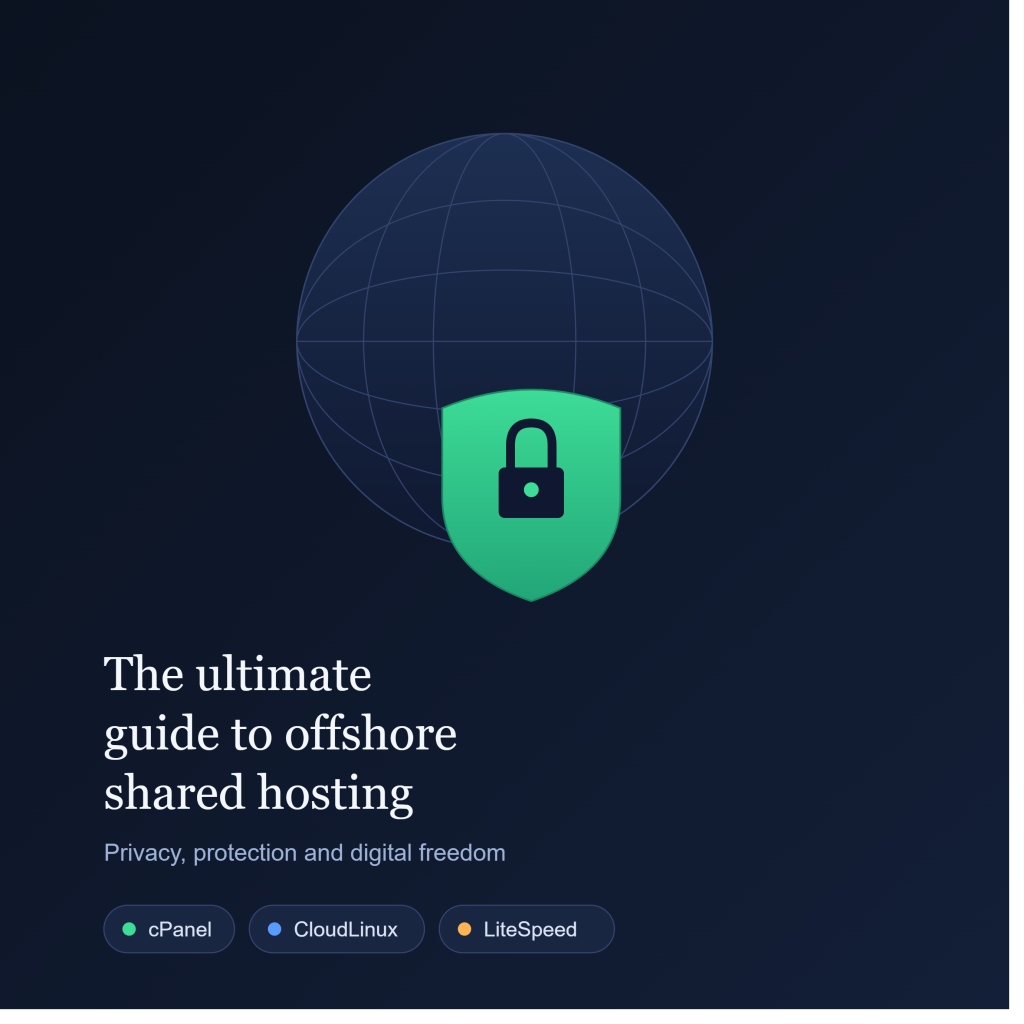
In an era of increasing digital surveillance, aggressive automated content takedowns, and strict regional regulations, where you host your website matters more than ever. Standard web hosting providers operate under regulatory frameworks that favor immediate, automated suspension over due process. For website owners who prioritize data privacy, operational security, and uncensored freedom of speech, traditional hosting is no longer a viable option.
This is where specialized hosting infrastructure becomes essential. Understanding how data privacy, local jurisdictions, and server positions intersect allows you to make informed decisions for your online projects. This definitive guide breaks down everything you need to know about setting up a secure online presence outside your home country.
What is Offshore Shared Hosting?
To understand why this infrastructure is growing in popularity, we must look at what it actually means in practice. Offshore shared hosting refers to a web hosting configuration where your website files are stored on a physical server located outside your home country—specifically in a jurisdiction chosen for its strict data privacy laws and favorable regulatory environment.
Because it is a “shared” setup, multiple websites utilize the resources of a single physical server. This makes it an incredibly cost-effective starting point for individuals, bloggers, small businesses, and startups who need specialized protection without the overhead costs of a dedicated server or Virtual Private Server (VPS).
The Core Mechanics of Shared Infrastructure
In a shared server environment, the host utilizes software abstraction layers (such as CloudLinux) to partition server resources among users. While you share CPU cores, RAM, and network ports with other accounts, your directory remains isolated. When this setup is deployed offshore, the hosting provider ensures that the underlying server hardware is physically located within secure data centers in privacy-friendly nations.
Who Truly Needs an Offshore Server?
This specialized form of hosting isn’t designed for typical local businesses. Instead, it serves an important niche of webmasters, including:
- Independent Journalists and Whistleblowers: Writers who publish investigative reports or expose institutional corruption without risking immediate, arbitrary censorship.
- Privacy Advocates: Individuals who believe their personal identity should not be tied to public domain registries or hosting accounts.
- High-Risk Content Creators: Operators of forums, crowdsourced platforms, or sites dealing with political commentary, cryptocurrency projects, or controversial discussion topics.
- International E-commerce Brands: Businesses seeking to insulate their digital storefronts from competitor abuse, such as malicious automated takedown campaigns.
The Critical Importance of DMCA Ignored Shared Hosting
The biggest vulnerability facing modern websites hosted in countries like the United States is the systemic abuse of copyright legislation. The Digital Millennium Copyright Act (DMCA), passed in 1998, was designed to protect intellectual property online. However, its automated safe-harbor mechanics have turned it into a weapon for anti-competitive behavior.
Standard corporate hosts operate under a “shoot first, ask questions later” policy. When they receive an automated DMCA notice, they will immediately suspend your hosting account to protect themselves from secondary liability, without checking if the claim is valid or fake.
Opting for dmca ignored shared hosting solves this problem structurally. Because the servers reside in countries where U.S. copyright law holds no jurisdiction, these hosting providers do not automatically pull the plug on your website when a generic, automated email notification arrives.
+—————————————————————–+
| HOW TAKEDOWN REQUESTS DIFFER |
+—————————————————————–+
| Standard US Hosting: |
| [DMCA Notice Received] —> [Automated Suspension] (No Review) |
| |
| Offshore DMCA-Ignored Hosting: |
| [DMCA Notice Received] —> [Manual Host Review Under Local Law]|
+—————————————————————–+
How Jurisdictional Isolation Shields Your Site
A provider offering dmca ignored shared hosting doesn’t operate in a lawless vacuum. Instead, they adhere strictly to the laws of their local jurisdiction. If a third party wants content removed from your site, they cannot simply send an automated form letter; they must submit legal proof that complies with the court systems of the country where the server physically sits. This procedural barrier filters out over 95% of bad-faith or automated corporate complaints, keeping your online operations steady and predictable.
Key Benefits of Choosing an Offshore Solution
Moving your web assets to an offshore shared hosting plan offers significant advantages that go far beyond ignoring copyright notices. Let’s examine the primary reasons webmasters migrate their data to international servers.
1. Complete Identity and Privacy Protection
When you sign up for standard web hosting, you are often forced to go through invasive identity checks, provide phone numbers, or upload government-issued identification. Offshore hosts, by contrast, prioritize complete anonymity. They allow you to register using nothing more than an anonymous email address, ensuring your real name and location are never attached to the account.
2. Freedom of Expression and Anti-Censorship
If your website handles sensitive political topics, alternative news, or controversial research, traditional hosts may terminate your contract under vague “Acceptable Use Policies” simply because your content draws public complaints. Offshore data centers operate under strict free-speech protections, ensuring your platform cannot be wiped out by localized political or social pressure.
3. Immunity to Malicious Competitor Attacks
In highly competitive niches, unscrupulous businesses frequently use fake copyright flags to take down rival websites during high-traffic sales periods or product launches. By utilizing dmca ignored shared hosting, you ensure that your store, landing page, or portal remains live and accessible, preventing rivals from hijacking your search engine visibility through automated legal loopholes.
Top Global Jurisdictions for Offshore Web Hosting
Not all offshore locations are created equal. The safety of your data depends heavily on the specific country you select. The ideal hosting nation must feature a combination of state-of-the-art data center infrastructure, excellent global network connectivity, and a legal framework that rejects foreign automated censorship requests.
| Jurisdiction | Primary Legal Advantage | Network Strength | Best For |
| Ukraine | Operates outside US/EU DMCA authority; strict judicial review for takedowns | High-speed fiber backbones & direct European routing | High-risk content, file hosting, & budget-conscious privacy |
| The Netherlands | Rejects automated foreign complaints; high local legal bar | Exceptional (AMS-IX Hub) | European traffic, high bandwidth & maximum uptime |
Ukraine: Eastern European Legal Independence and Performance
Ukraine has emerged as a premier strategic location for offshore shared hosting and privacy-focused web infrastructure. Because the nation operates entirely outside US copyright jurisdiction, hosting providers based here do not respond to automated foreign DMCA takedown requests.
To alter or remove content hosted on a Ukrainian server, third parties must navigate local legal channels, providing website owners with a strong layer of defense against competitor abuse and fake automated complaints. Paired with well-connected data centers that deliver rapid routing to both European and international audiences, Ukraine provides an optimal balance of strong legal protection, high-speed performance, and cost-effective hosting plans.
The Netherlands: The Connectivity and Privacy Hub
The Netherlands is widely considered a world-class choice for dmca ignored shared hosting and robust privacy infrastructure. While the country operates under strict European data protection standards (GDPR), Dutch hosting laws require a rigorous local judicial process before any server can be taken offline.
Furthermore, because Amsterdam houses AMS-IX—one of the largest internet exchange points on the planet—hosting your platform on Dutch servers delivers exceptional global reach, low latency, and unshakeable uptime for high-traffic websites.
Debunking Common Myths About Offshore Hosting
Because of how it is portrayed in popular media, offshore server management is surrounded by a massive amount of misinformation. Clearing up these misconceptions helps business owners leverage these services legally and effectively.
Myth 1: Offshore Hosting is Only for Illegal Activities
This is entirely incorrect. Legitimate offshore hosting providers have strict rules against universally illegal content, such as financial scams, phishing networks, malware distribution, and child exploitation. Instead, these services exist to protect basic legal rights: the right to data privacy, freedom from corporate bullying, and protection against competitive abuse.
Myth 2: Offshore Websites are Incredibly Slow
Many believe that placing a server in a different country means their website will take ages to load. In reality, modern international network paths are highly optimized. If your target audience is in Western Europe and your server is located in an enterprise-grade facility in Amsterdam, your users will experience zero noticeable latency difference compared to a domestic server.
Step-by-Step Guide to Securely Launching Your Offshore Site
Setting up an offshore shared hosting account requires a careful approach if you want to maintain maximum operational privacy and security. Following a systematic checklist ensures your setup remains completely secure from day one.
1.Establish a Secure Connection:Step 1.
Before visiting any hosting provider’s website, launch a trustworthy, no-logs Virtual Private Network (VPN) or use the Tor browser network. This prevents your local internet service provider (ISP) from logging your connection to an offshore entity.
2.Create a Dedicated Anonymous Email Account:Step 2.
Register an encrypted, privacy-first email address (using platforms like ProtonMail or Tuta) without providing a recovery phone number or identifying real-world details. Use this address exclusively for managing your hosting infrastructure.
3.Select Your Offshore Shared Hosting Plan:Step 3.
Navigate to the provider’s portal and choose an offshore shared hosting plan tailored to your traffic needs. Ensure it explicitly features NVMe storage, a built-in control panel like cPanel, and a clearly stated automated backup routine.
4.Complete Your Purchase Using Cryptocurrency:Step 4.
At checkout, select the crypto payment option. Fund the invoice from a private wallet using a secure digital asset to guarantee that no credit card numbers or banking trails link back to your personal identity.
5.Configure Your Domain Name System (DNS) Safeguards:Step 5.
Do not use standard registrar name servers. Point your domain to a privacy-respecting, reverse-proxy system like Cloudflare, or utilize an offshore DNS provider to mask the real IP address of your backend server from public lookup tools.
Maximizing Website Speed and Performance Offshore
While choosing a top-tier server network keeps your platform stable, optimizing your software stack is what keeps it running fast. When your site is physically located further away from some of your visitors, solid technical optimization can make up for any distance lag.
Implementing a Content Delivery Network (CDN)
A CDN stores cached static versions of your website’s files (such as CSS, images, and javascript components) across a worldwide network of edge nodes. When a visitor lands on your site, the CDN serves these files from the closest physical geographic location, keeping load times fast while your dynamic processing database remains fully protected back on your offshore server.
Aggressive Caching Protocols and Image Compression
Because you are working within a shared resource ecosystem, minimizing the load on your server’s processor is essential. Install advanced server-side caching mechanisms (like LiteSpeed Cache or Redis) and ensure every asset is fully optimized. Converting images to modern formats like WebP or AVIF can instantly slash your total page weight by more than 50%.
Summary and Next Steps
Choosing the right foundation for your web properties is a vital business decision. Standard domestic corporate hosting leaves you vulnerable to automated account termination, corporate competitor abuse, and intrusive data tracking.
By migrating your files to a robust
architecture, you take back control of your digital presence. Whether you require the uncompromising legal separation of a dmca ignored shared hosting plan, the robust data protection laws of privacy-first jurisdictions, or simply a secure space to express your ideas freely, offshore environments give you the safety net your business needs to grow securely.
Don’t wait for an unexpected, automated takedown flag to disrupt your online operations. Protect your content, secure your business identity, and ensure your web platforms stay online indefinitely.
Ready to transition to an unshakeable infrastructure? Explore our highly optimized offshore shared hosting packages today to experience unmetered bandwidth, enterprise-grade data privacy, and complete digital freedom on our dmca ignored shared hosting servers.